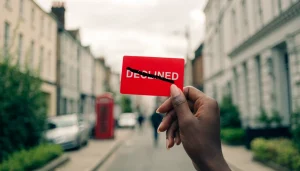
A BNB payment claim does not establish a casino’s licence, and UK-licensed operators cannot accept cryptocurrency.

The first distinction to make is between a casino’s payment options and its licence. In Great Britain, a remote gambling operator serving customers must hold the relevant licence from the UK Gambling Commission. The Commission regulates the gambling service even if the operator’s key equipment is based somewhere else. A website’s location, branding or choice of payment methods does not replace that requirement.
For a player looking at an online casino that mentions BNB, the general rule for licensed operators is decisive: UK-licensed operators cannot accept cryptocurrency. That applies to crypto payments as a category, rather than being a special rule for one coin. So a claim that a site takes BNB should not be mistaken for evidence that it is licensed to offer gambling in Great Britain, or that a UK-licensed casino can accept that payment.
The UK Gambling Commission is the sole commercial gambling regulator for Great Britain. It grants operating licences to gambling businesses and personal licences to individuals working in relevant roles. Those are different permissions: a company’s licence covers its operation, while an individual’s licence relates to the person’s work. Neither should be confused with a coin, wallet or payment provider.
If you’re comparing BNB casino options in the UK for 2026, check the details that matter to you before choosing. The available payout information gives you one point to consider for each operator.
WinBeast
WinBeast lists a payout speed of 1–3 business days. You can use this as one factor when assessing the option.
SpinFormula
SpinFormula lists a payout speed of 1–3 business days. You can use this as one factor when assessing the option.
NightWin
NightWin lists a payout speed of 1–3 business days. You can use this as one factor when assessing the option.
EvoSpin
EvoSpin lists a payout speed of 1–3 business days. You can use this as one factor when assessing the option.
SlotoSport
SlotoSport lists a payout speed of 1–3 business days. You can use this as one factor when assessing the option.
Jetsetspins
Jetsetspins lists a payout speed of 1–3 business days. You can use this as one factor when assessing the option.
NightLuck
NightLuck lists a payout speed of 1–3 business days. You can use this as one factor when assessing the option.
x3bet
x3bet lists a payout speed of 1–3 business days. You can use this as one factor when assessing the option.
Zombillion
Zombillion lists a payout speed of 1–3 business days. You can use this as one factor when assessing the option.
BeOnBet
BeOnBet lists a payout speed of 1–3 business days. You can use this as one factor when assessing the option.
A crypto symbol on a casino page tells you about a claimed payment option; it does not establish the site’s regulatory status. Likewise, a site describing itself as “international” does not answer whether it may lawfully provide remote gambling to customers in Great Britain. The practical check is whether the operator has the appropriate Gambling Commission licence.
This matters because a site can be reachable from Britain without being part of the British licensing system. Offshore casinos operate outside UKGC regulation if they do not hold a UKGC licence. A person playing there is not breaking the law simply by using the site, but that does not give them the protections attached to a licensed operator. They do not have the UKGC regulatory safety net, UKGC dispute resolution or GamStop integration. A polished cashier page is not a substitute.
At a UK-licensed casino, the regulatory relationship is with the operator, not with the cryptocurrency network. The Commission’s remit covers remote gambling offered to consumers in Great Britain regardless of where the essential equipment sits. In other words, moving servers or presenting a crypto payment option does not move a gambling business beyond the rules when it is serving this market.
I would treat the licence question as the first filter, not a footnote after comparing deposits. Before putting money into an account, check the operator’s licence entry on the Commission’s public register and make sure it matches the business running the site. If the operator cannot be matched to a current licence, do not assume the site is regulated merely because it accepts British customers or displays familiar branding. Simple check. Worth doing.
There is a geographical detail that often gets blurred in casual descriptions. The Commission regulates remote gambling offered to consumers in Great Britain, and it is the commercial gambling regulator for that territory. The Gambling Act 2005 applies in England, Wales and Scotland, but not Northern Ireland. So “UK rules” is convenient shorthand, but the precise regulatory statement here concerns Great Britain.
That distinction does not change the central point for a player in England, Scotland or Wales: a remote operator selling gambling to customers there needs the relevant Commission licence. Cryptocurrency does not create an exception to that requirement, and an offshore site does not become UK-licensed by accepting customers from Britain.
For a BNB online casino, then, the legal context is narrower than a list of payment badges might suggest. It does not establish that any particular site accepts BNB, nor does a BNB claim prove that a casino is licensed. Keep those questions separate: one is about the payment method a site advertises; the other is whether the operator is authorised to serve customers in Great Britain.
A comparison is only useful if it compares the thing you intend to use. For a BNB casino, that means evidence that a named operator accepts BNB for gambling payments, not merely that it offers crypto payments or appears in a list of casinos. Without that confirmation, a ranking may look decisive while telling you very little about whether you can deposit or withdraw using BNB.
I would treat the phrase “best BNB casino” as a claim that needs proof, not as a description that makes itself true. A casino may support other cryptocurrencies without supporting BNB. It may mention a coin in a general payment guide without offering it at checkout. And a payment method can change, so an old comparison is not enough to establish what is available now.
The same applies to a UK-focused comparison. “Best” could mean the easiest payment route, a particular range of games, or a strong regulatory standing. Those are different judgements, and each needs its own evidence. A site cannot be called the best choice for BNB payments if acceptance has not been checked; nor does a general ranking tell you whether a payment method works for a UK player.
Before relying on a BNB recommendation, look for a clear link between the operator and the payment method. The operator should be named, BNB should be identified specifically, and the information should make clear whether it concerns deposits, withdrawals or both. A broad statement that a site accepts cryptocurrency does not answer those questions.
The comparison should also explain how it reached its conclusions. If it ranks casinos by payment support, it should show that this was checked for each operator rather than inferred from a general crypto label. If it ranks them by licensing, that is a separate measure. A high position in a general casino ranking does not prove that the operator accepts BNB.
There is a useful distinction between a comparison that reports a verified feature and one that offers an opinion. “This operator supports BNB deposits” is a factual claim that should be checkable at the operator’s payment page or cashier. “This is the best BNB casino” is a judgement built on that claim and other stated criteria. If the underlying feature is unconfirmed, the judgement has no firm footing.
The operator ranking placed alongside this discussion is not, by itself, a verified ranking of casinos accepting BNB. Its presence near a BNB comparison does not establish that every listed operator supports BNB, or that its order reflects BNB payment quality. Treating proximity as proof would be an easy mistake.
That list may help you see which operators are being compared in the wider market, but it should not be read as a BNB recommendation unless each entry expressly confirms BNB support. A licence, payout-speed note, minimum deposit or short verdict cannot fill that gap. Those details concern other aspects of an operator; they do not verify a particular coin as a payment option.
This matters if you are looking for a BNB deposit casino or a site where you can play casino games using BNB. The relevant question is not whether a casino is well known, or whether it accepts some digital currencies. It is whether BNB itself is available for the transaction you plan to make, under the terms that apply to your account.
Payment pages can use broad categories that sound more specific than they are. “Crypto accepted” is not the same as a confirmed BNB option. Even a wallet or network reference needs to be read carefully: a coin name, a network and a method of transferring funds are not interchangeable. If the cashier does not identify BNB clearly, do not assume that another crypto route will work.
Nor should a game label settle the question. A “BNB slot” could mean a game with a BNB-themed name, a slot played at a casino that accepts BNB, or simply wording used in a promotion. Those describe different things. A comparison should identify actual game availability separately from payment support, rather than letting one suggest the other.
For a betting casino, the same standard applies. A sportsbook or casino may have different payment conditions across products or account areas. A general statement about the operator cannot establish that BNB is accepted for every kind of play or transaction.
My rule is plain: separate what is confirmed from what is inferred. If a comparison does not name operators with checked BNB support and explain what it is comparing, it cannot tell you which BNB casino is best. It can still be a general overview, but it should not be dressed up as a coin-specific verdict. A ranking is not evidence.
Bitcoin Cash and BNB are different cryptocurrencies. That sounds obvious, but it matters when you are judging casino information: a claim about one coin does not become a claim about the other just because both are used in discussions of crypto gambling.
A page about Bitcoin Cash may describe casinos, deposits or account procedures. Those details apply to the specific coin and operators being discussed. They do not confirm that a casino accepts BNB, that it lets you withdraw in BNB, or that its rules for BNB users are the same. Treating the two as interchangeable would turn an unsupported assumption into advice.
The same applies to licensing. A statement that a particular Bitcoin Cash casino operates under an offshore licence tells you something about that casino, not about every site that might accept BNB. It does not establish that a BNB casino has an offshore licence, a UK Gambling Commission licence, or any licence at all. The name of a payment coin is not a licence check.
Account checks are another area where it is easy to overgeneralise. A description of email-based registration or limited identity checks at a Bitcoin Cash casino cannot establish what a BNB user would be asked to provide elsewhere. Checks can depend on the operator and its terms, and a payment method alone does not tell you what verification will be required. Don’t infer a site’s identity rules from a description of a different coin’s use.
Payment claims need the same care. A Bitcoin Cash deposit procedure, confirmation time or withdrawal experience is not a guide to how a BNB transaction would work at another casino. Nor does the fact that a site handles one cryptocurrency confirm that it supports another. The operator’s payment information needs to name BNB specifically, and the relevant terms need to match the transaction you intend to make.
That distinction is useful when reading material that groups several coins under a broad label such as “crypto casinos”. The label may describe the subject of an article, but it does not prove that every listed casino accepts every coin mentioned. Check the wording closely: is the operator’s information explicitly about BNB, or does it refer only to cryptocurrency in general? General wording is not confirmation of a particular payment option.
There is also a difference between a casino being discussed in relation to BNB and a casino being confirmed as available to you. A mention of BNB in an article, a promotional page or a user comment may be a lead, but it does not settle whether the operator currently accepts it, whether the method is available to customers in the UK, or what conditions apply. Those are separate claims, and each needs support specific to the operator and the payment method.
For games, the coin and the catalogue are separate questions too. A description of games at a Bitcoin Cash casino does not establish which titles, if any, can be played at a site using BNB. It cannot tell you whether a game is available to a particular account or whether a payment method affects access. Keep claims about a casino’s games tied to that casino, rather than carrying them across from another cryptocurrency’s listings.
The useful habit is simple: keep each detail attached to the coin, operator and context it actually describes. If a review discusses Bitcoin Cash, read it as Bitcoin Cash information. If you are considering BNB, look for an explicit statement about BNB from the operator and check that it applies to your location and account. A broad crypto label is not a substitute for that confirmation.
This does not make Bitcoin Cash information worthless. It can tell you what a source says about Bitcoin Cash and the particular casinos it covers. It just has a boundary. Beyond that boundary, it cannot establish BNB payment support, BNB-specific account rules, licensing status or game availability. One coin’s description is not a shortcut to the other.
A ranked list can look precise without giving you a sound reason to trust it. For a useful BNB casino shortlist, each named operator would need to be confirmed as accepting BNB, with the same checks applied across the whole selection. A ranking also needs clear criteria: otherwise, the order is just an opinion dressed up as a comparison.
That matters when you are deciding where to deposit. A casino accepting other cryptocurrencies is not automatically a BNB casino, and a general reputation for crypto gambling does not establish that BNB is available. Payment options can differ between operators and change over time. Treating a broad label as confirmation could send you to a site that does not offer the method you want.
The same care applies to the word “top”. It might refer to payment support, licence status, usability or some other quality, but those are different tests. Without a consistent basis, one site cannot fairly be placed above another. A list of names alone would not settle the question; a list of unsupported claims would be worse.
Keep those questions separate. A licence and a payment method answer different things, and neither should be inferred from a site’s position on a page.
For a genuine shortlist, check the operator’s own payment information before you create an account or send funds. Look for BNB specifically, rather than a vague reference to crypto, and make sure the information applies to the casino product you intend to use. If the payment method is not named clearly, do not assume that another coin’s availability means BNB will work too.
Then check whether the operator is authorised to serve customers in Great Britain. The Gambling Commission regulates remote gambling offered to consumers there, and operators selling into the British market must hold the relevant licence. An offshore casino is outside the UKGC regulatory system; that is not the same as being a licensed UK casino. The distinction matters more than a prominent badge or a high place in a ranking.
If it cannot explain that plainly, the ranking tells you little. A shortlist should make a decision easier, not ask you to take its labels on trust.
Until BNB support and the comparison criteria are established for each operator, calling any selection the leading BNB casinos in the UK would promise more than it can show. Check the payment method and licensing status independently before acting. A confident ranking is easy to publish. A reliable one takes proof.
A useful comparison needs more than a casino name beside a Binance Coin logo. It needs confirmation that the operator accepts BNB for the specific action being compared, and that the offer is available to customers in Great Britain. Without that, a ranking can look precise while leaving its central point unanswered.
The distinction between payment methods matters. Bitcoin Cash and BNB are separate cryptocurrencies; a casino’s support for one does not show that it accepts the other. Nor does a general “crypto casino” label tell you which coins its cashier supports, whether they can be used for deposits or withdrawals, or whether access is available to UK customers. Those details need to be checked for the particular operator, not inferred from a neighbouring coin or a promotional badge.
There is also a separate question: what kind of gambling service is being compared? The Gambling Commission regulates remote gambling offered to consumers in Great Britain, wherever the operator’s key equipment is located. A casino serving British customers must hold the relevant Commission licence. UK-licensed operators cannot accept cryptocurrency, so a claim that a licensed British casino takes BNB would need especially careful scrutiny.
An offshore casino may be reachable from the UK, but access does not make it UK-licensed. Players are not criminalised simply for using an offshore gambling site; they do, however, play outside the UKGC regulatory safety net. That means no UKGC dispute resolution or access to an approved alternative dispute resolution service, and no GamStop integration through that casino. A glossy comparison card does not change those limits.
Offshore casinos operate outside the UKGC regulatory system. Using them means you lack the UKGC regulatory safety net, UKGC dispute resolution, and GamStop integration.
Before relying on a BNB comparison, look for clear, operator-specific terms: the coin must be named, the relevant payment direction must be stated, and the availability for British customers must be explicit. Then check the operator’s licence on the Gambling Commission’s public register. If the operator is not listed as licensed for the relevant service, do not treat it as a UK-licensed casino, however familiar the brand or polished the page may look.
The point is not that every comparison is useless. It is that a BNB label alone cannot support claims about an operator’s UK status or payment service. Keep those questions separate: whether a casino accepts BNB is one claim; whether it is licensed to serve Great Britain is another. Confusing the two is an easy way to mistake a payment symbol for a regulatory credential. A small logo is not a licence.
For a casino serving customers in Great Britain, the key boundary is the operator’s licence, not the coin named on its payment page. Remote gambling businesses selling into the British market must hold a licence from the UK Gambling Commission, wherever their equipment is based. UK-licensed operators are prohibited from accepting cryptocurrency, so that rule covers BNB as well as other digital coins.
That does not mean every site that mentions BNB is part of the UK-licensed market. An offshore casino operates outside the UKGC system and does not provide its regulatory safety net. A player does not commit an offence simply by using an offshore casino, but that does not make the site UK-licensed or give the player access to UKGC dispute resolution or an approved alternative dispute resolution service. Offshore casinos also do not integrate with GamStop.
There is a useful distinction here. Bitcoin Cash is another cryptocurrency, not another name for BNB. A specialist review’s account of BCH casinos describes wallet-based deposits and limited identity checks at the offshore sites it covered. That observation is specific to those Bitcoin Cash sites; it cannot establish how a BNB casino handles payments, identity checks or withdrawals. Similar-looking payment options do not make the underlying evidence interchangeable.
If you are checking a site’s status, look for its UKGC licence on the Commission’s public register before depositing. A foreign licence, a cryptocurrency logo or a claim that a casino accepts British customers does not substitute for a UKGC operating licence. For a casino without one, the practical trade-off is plain: you are outside the British complaints and dispute-resolution framework, and you will not have GamStop integration.
So the licensing point is straightforward, even when a site’s branding is not. A BNB payment option cannot turn an offshore casino into a UK-licensed operator, and a BCH review cannot certify a BNB service. Keep the coin, the operator and its licence separate in your checks. It saves a muddle later.
That matters because a site mentioning crypto, or displaying a broad list of digital currencies, is not proof that it currently supports Binance Coin in its cashier.
I would treat the two payment directions separately. A deposit option does not establish that winnings can be withdrawn in BNB, and a withdrawal page does not show that you can fund an account with it. Before relying on either, look for BNB specifically in the operator’s own cashier and payment terms. A general “crypto accepted” label does not answer the practical question.
Details matter, too. BNB can refer to a particular asset, but a payment screen may also require you to select a network. Check that the casino’s stated network matches the one used by your wallet. Sending funds through an unsupported network or to the wrong address can leave you unable to recover them. Never assume that a familiar currency symbol means the route is compatible.
For withdrawals, check whether the operator says BNB is an available payout method, whether it requires the same method used to deposit, and whether any account conditions apply. Those terms can change, so rely on the current cashier and the operator’s own written rules rather than an old review, a forum post or a third-party payment list. If the wording is unclear, ask the operator to confirm the exact asset and network before transferring funds.
That is the useful distinction when assessing BNB crypto casinos: a claim needs to be specific enough to test. The casino should identify BNB as a supported payment method, make clear whether it applies to deposits, withdrawals or both, and provide instructions that match the wallet route you intend to use. If you cannot verify those points before paying, do not treat BNB as an available option.
A payment method is not confirmed by a logo, a marketing headline or a generic cryptocurrency reference. Check the live cashier, read the payment terms, and make sure the same method is available for the action you actually plan to take. No guesswork needed.
A casino that accepts cryptocurrency does not necessarily accept BNB. Payment menus can group several coins under one heading, but the cashier still needs to name the specific asset and show how it is handled. I would not treat a general “crypto” label, a wallet logo or an old review as confirmation.
Start with the operator’s own payment page and terms. Look for BNB by name, then check whether the page explains the supported network. A coin and a network are not interchangeable: sending funds through a route the casino does not support can leave a payment delayed or unrecoverable. If the cashier’s wording is vague, pause rather than choosing the nearest-looking option.
Then check both directions. A deposit option does not prove that withdrawals can be made in BNB; the operator may use a different method or impose separate conditions. Read the withdrawal terms and ask customer support to confirm, in writing, that BNB can be used for deposits and cashouts from your location. Keep the reply and compare it with the cashier before moving funds.
For UK-facing casinos, the word “UK” in a site description is not enough to establish that the operator is licensed to serve Great Britain. Check the Gambling Commission’s public register for the operator and the relevant licence. Do not let a BNB symbol or a payment page stand in for that check.
I’d also look at whether the casino clearly identifies the account currency, any conversion process and the network the cashier expects. If those details are hard to find, the payment route is not clear enough to use confidently. Support can answer a direct question; it cannot turn an unclear payment screen into a safe assumption.
This is a slower check than clicking a coin icon, but it avoids confusing one cryptocurrency with another or sending funds through an unsupported route. Treat a casino as accepting BNB only when its own current cashier and terms explicitly say so, and when the details match the wallet you intend to use. If they do not match, stop there. No guesswork.
A casino’s game catalogue and its payment methods are separate things. Seeing BNB mentioned in a payment context would not, by itself, tell you which slots, table games or live-dealer titles you could play.
That distinction matters in the UK. UK-licensed casinos cannot accept cryptocurrency, so BNB is not a way to fund play at a UKGC-licensed casino. A site that accepts crypto may operate outside the UKGC system; that does not make it a UK-licensed option. If you use an offshore casino, you do not have the UKGC regulatory safety net, UKGC dispute resolution or GamStop integration. Playing there is not a criminal offence for you, but those protections are absent.
If you are checking a particular game, look at the casino’s own catalogue and the game’s rules rather than assuming every title works with every payment method. Confirm that the casino actually offers the title and that its terms allow you to play from your location. A payment option and a game listing answer different questions.
For a UK player, the first distinction is still the licence: operators offering real-money gambling to customers in Great Britain need a Gambling Commission licence, and licensed operators cannot take crypto. So a promise to play with BNB should not be mistaken for a verified UK-licensed games offer. Keep the claims separate. No guesswork.
Before you try to deposit with BNB, open the casino’s cashier and check that Binance Coin is named as a payment method. A general “crypto” label is not enough: it does not tell you which asset or network the cashier accepts. If BNB is not clearly offered, do not send funds to an address shown for another cryptocurrency.
Read the deposit instructions on the payment screen, not a guide for a different casino. Confirm the selected network matches the network in your wallet, and check whether the cashier requires a particular address format or extra payment reference. Sending to the wrong address or network can leave you unable to recover the funds. Take care with copied addresses, too; compare the details before approving the transfer.
Check the casino’s stated minimum deposit, any network fee, and how the balance will be credited. These details can differ between payment routes and may change. Do not assume a deposit is complete as soon as you send it: follow the status shown by the cashier and contact support if the transaction remains unresolved. Save the transaction details and any confirmation displayed.
Think about withdrawals before you deposit. Check whether the casino permits payouts in BNB, whether it requires the same network, and what checks may apply to your account. A deposit method does not, by itself, confirm that the same method is available for cashing out. That is worth checking first.
If you are in Great Britain, there is a separate point: UK-licensed operators cannot accept cryptocurrency. A cashier offering BNB is not proof that a casino holds a UK Gambling Commission licence. Treat the payment screen as one detail to verify, not as evidence of the operator’s regulatory status. If you cannot confirm the asset, network and withdrawal terms, pause rather than guess.
You will usually face minimal identity checks; many offshore BCH casinos let you create an account with just an email address and password.
No, not at UK-licensed casinos: they are prohibited from accepting cryptocurrency, including Bitcoin Cash. Using an offshore casino is not criminalised for an individual in the UK, but it does not come with UKGC protections.
UK-licensed operators cannot accept cryptocurrency for gambling. Individuals are not criminalised for gambling with an offshore operator, but that operator does not provide UKGC protections.
Not automatically: a payment option alone does not establish a casino’s licence status. However, UK-licensed operators cannot accept cryptocurrency, so check the operator’s entry on the Gambling Commission’s public register.
An offshore BCH casino does not give you the protections of UKGC regulation, UKGC dispute resolution or GamStop. Check the operator’s licence on the Commission’s public register before depositing.
You may not need to complete traditional checks at the outset: many offshore BCH casinos allow account creation with just an email and password. Identity checks are usually minimal, rather than guaranteed to be absent.