The guide explains how streamed play, on-screen controls and roulette basics shape the experience of playing remotely.
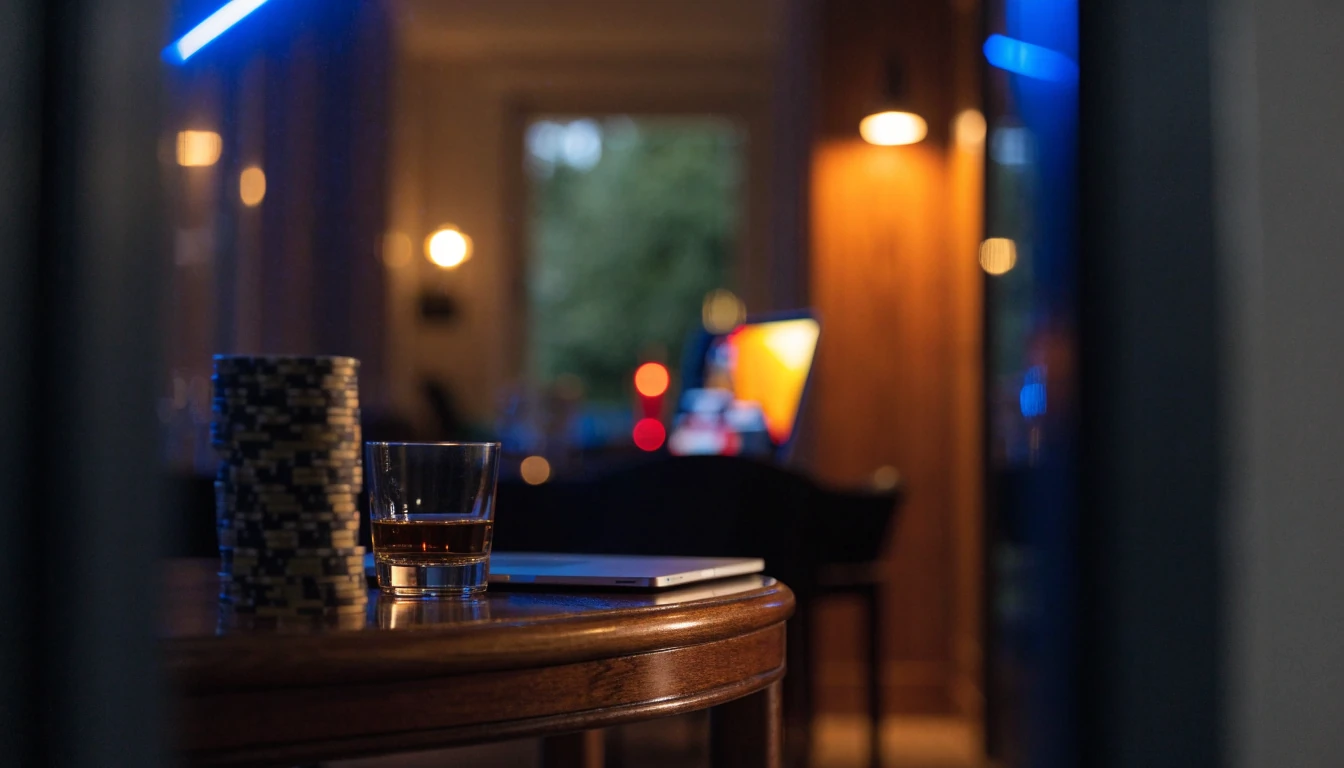
Playing Lightning Roulette online means using a screen for two jobs at once: it carries the live game to you, and it gives you the controls for placing bets. The action is streamed in real time from a studio, while your choices are sent through an on-screen interface. You are not simply opening a digital roulette screen and tapping through a sequence of animations. The online format connects your betting decisions to a live broadcast.
That difference is easy to miss when you first open a table. The game still appears on your device, and you still use buttons and menus to make your selections. But the broadcast is unfolding as you watch, rather than being generated entirely as a self-contained digital session. You place your bets through the interface, then follow the live action on the same screen. It is a more connected experience than playing alone against a digital display, though you are still playing remotely.
For anyone looking for an online casino with Lightning Roulette, that distinction is more useful than the device itself. A phone, tablet or computer can show the game, but the important part is how the broadcast and betting controls work together. A live dealer casino provides the stream and the interface; you use the interface to take part from wherever you are. The studio is elsewhere. Your screen is the point of contact.
When considering live casino Lightning Roulette in the UK in 2026, you may want to check practical details as well as whether a casino suits your needs. The verdicts below stick to the payout-speed information available for each operator.
WinBeast
WinBeast has a stated payout speed of 1–3 business days. You can use this as a guide when considering withdrawal timing.
SpinFormula
SpinFormula lists a payout speed of 1–3 business days. Keep that timeframe in mind when planning a withdrawal.
NightWin
NightWin's stated payout speed is 1–3 business days. This gives you a timeframe to consider for withdrawals.
EvoSpin
EvoSpin lists payouts as taking 1–3 business days. You can factor this stated timing into your choice.
SlotoSport
SlotoSport has a stated payout speed of 1–3 business days. This is the available detail to consider when looking at withdrawal timing.
Jetsetspins
Jetsetspins lists a payout speed of 1–3 business days. You can use that timeframe when considering how soon you may receive a payout.
NightLuck
NightLuck's stated payout speed is 1–3 business days. Keep this timing in mind when considering withdrawals.
x3bet
x3bet lists payouts as taking 1–3 business days. This gives you a stated timeframe to consider for withdrawals.
Zombillion
Zombillion has a stated payout speed of 1–3 business days. You can factor this detail into your expectations for withdrawal timing.
BeOnBet
BeOnBet lists a payout speed of 1–3 business days. This stated timeframe may help you plan around withdrawals.
The interface is the practical centre of the experience. You need to be able to see the live game and make your selections without losing track of what is happening. Buttons and betting areas are part of the digital layer; the streamed action is the live layer. Neither replaces the other. If you are used to a fully digital roulette game, where everything is presented within one software experience, this division is the main adjustment: the game is being broadcast, while your decisions are made through a separate on-screen control system.
I would treat that as a change in how you take part, not as a promise of a different result. A live stream does not make a bet more favourable, and an interface does not change what you have chosen. It simply gives you a way to place bets while following a real-time game. The screen can make the process feel immediate, but it is still worth pausing long enough to check your selection before confirming it. A quick tap is still a decision.
There is also a difference in rhythm. Live games move more slowly than digital versions, and their minimum bets are higher. You have less of the rapid, self-directed feel that can come with a digital game, because the live format follows the pace of the broadcast. That can suit someone who wants to watch as events unfold; it may feel less convenient if you prefer to make decisions quickly and move straight on. Nothing complicated about that. Different format, different tempo.
The stream also depends on your connection. A stable internet connection matters because you are receiving live video while using the betting interface. If the picture freezes or the connection drops, the experience can become difficult to follow. That is not a feature of the roulette itself; it is a practical consequence of playing through a live broadcast. Before settling in, make sure your connection is reliable enough to keep the stream and controls usable.
On a small screen, it helps to take a moment to understand where the game view ends and the betting controls begin. The layout will depend on the casino’s interface, so I would not assume every table presents things in precisely the same way. Take a moment to orient yourself before placing a bet, especially if you have switched devices or are using a layout you have not seen before. You do not need to rush just because the game is live.
This is why “online” does not mean “instant” in quite the same way across casino games. With a digital roulette game, the action is contained in the software. With live dealer roulette, the software is the route into a streamed game: it displays the action and accepts your betting choices. That gives you the convenience of remote access while keeping the game tied to a live broadcast. The trade-off is that you depend on both a functioning interface and a steady stream.
If you are trying Lightning Roulette at an online casino in the UK, focus first on whether you are comfortable with that setup: live video, on-screen betting and a slower pace than digital play. Set a budget before you begin and stick to it; the stream’s sense of immediacy is no reason to keep playing beyond your limit. This is entertainment, not gambling advice. The online format changes how you watch and take part, not the need to make deliberate choices.
The useful starting point is simple: live dealer roulette and a digital roulette game may look similar on your screen, but they do not produce a result in the same way. In a live casino, a dealer spins a physical wheel. In a computerised version, a Random Number Generator (RNG) determines the result. The distinction is about how the outcome is produced, not about whether you can predict it.
In either format, the basic aim is to select the number where you think the ball will land. If it lands on your selection, you win according to the game’s rules. That is the central idea behind roulette, whether you are watching a real wheel or using a digital game.
When you open a live casino Lightning Roulette table, you are joining a streamed game built around a physical roulette wheel. The wheel is not a graphic animation standing in for a computer-generated result: the ball lands on a number on the real wheel, and that number determines the round’s outcome.
A computerised roulette game works differently. Its result comes from an RNG rather than a ball moving around a physical wheel. The display may still show a wheel or a ball, but the animation is part of presenting the result; it is not the process that decides it.
That difference is worth keeping clear. A live stream gives you a view of a physical game taking place, while an RNG game uses software to generate the outcome. Neither description makes the next result knowable in advance. The wheel can be watched; that does not make it predictable.
Roulette’s core logic stays easy to follow: the ball lands on a number, and a player wins when they selected that number, subject to the table’s rules. Live play changes the source of the result, not that basic relationship between your selection and where the ball lands.
That can make the first live session feel more tangible than a digital game. You can see a physical wheel in the stream rather than only seeing a computer-generated presentation. But the extra visual detail does not give you a reliable way to call the outcome. A spin is not a clue to the next one, and watching earlier results does not turn the next result into a forecast.
I’d keep that distinction in mind when moving between versions. A familiar-looking interface can make the games seem interchangeable, but one uses a physical wheel and the other relies on an RNG. The presentation may change; chance remains.
“Lightning Roulette” identifies the game you are looking for, but the name alone is not a substitute for checking the table’s rules. Before joining, take a moment to read the information shown for that particular game. It is the sensible way to confirm how the table works, rather than assuming every roulette title follows identical details.
That is particularly useful when you are comparing a live table with a digital roulette game. The physical-versus-computerised distinction tells you how the result is produced. It does not, by itself, explain every rule or feature associated with a specific title. Keep those questions separate: first understand whether the game is live or RNG-based, then read the table information for the rest.
There is no need to dress this up. A live roulette wheel is a physical wheel, and a computerised roulette result is generated by software. The number the ball lands on is what matters for the round. That is the basic footing you need before getting into more detailed rules.
For a UK player looking at live casino Lightning Roulette, it helps to treat the stream as a view of the game, not a forecasting tool. The wheel is real; the next result is still uncertain. Past spins cannot tell you what comes next, and no visible pattern makes a future number certain. Keep play within a budget you have set beforehand. This is entertainment, not gambling advice.
When I’m considering a casino for Lightning Roulette, I start with a plain check: does the operator hold a UK Gambling Commission licence for serving players here? In the UK, a live-dealer casino is legal only when it holds the relevant licence. The game’s name, polished presentation or familiar-looking website cannot take the place of that check.
That is a more useful starting point than hunting for a universal “best” casino. What suits you depends on what you want from the site, and a ranking cannot tell you whether an operator is properly licensed. Treat any list of recommendations as a prompt to investigate, not as proof that every option is suitable. I would rather spend a moment checking the operator than assume that a professional-looking page tells the whole story.
Look for the casino’s legal operator name and licensing information, then compare those details with the UK Gambling Commission’s records. A logo or a line of text in a footer is a clue, not confirmation. Make sure the licence relates to the company actually providing the gambling service, rather than relying on a brand name that may not match the licensed operator.
If the operator’s identity or licence details are hard to find, pause before creating an account or depositing. A clear mismatch is a reason to stop and check further, not to guess that it is a harmless naming difference. This is the basic test I’d apply whether I had found the casino through a friend, an advert or a search for a UK Lightning Roulette table.
Once licensing is clear, think about what you need from the experience rather than looking for a single winner. You might care most about being able to find the game easily, understanding the site’s account information, or having a layout that feels straightforward to use. Those are personal preferences, not evidence that one casino is objectively better.
I’d also read the operator’s terms before committing money. That is not the same as checking the licence: one tells you whether the operator is authorised to serve the market, while the other helps you understand the conditions attached to its offers and services. Keep those checks separate. A licensed casino can still have terms that do not suit you.
Set a budget before you begin, and do not raise it to recover a loss or extend a winning session. If you choose to play, use a payment method permitted for gambling in the UK; credit cards cannot be used to fund gambling. These are practical boundaries, not a way to make a casino or a session risk-free.
My shortlist process is deliberately unflashy:
If a site makes the first checks awkward, I would move on rather than fill in the gaps with assumptions. No list can make the decision for you, and a licence does not promise a particular result at the table. It establishes the essential point for a UK player: the operator is authorised to offer the gambling service here.
So, when comparing UK casinos that offer Lightning Roulette, begin with the licence, then judge the rest by your own needs and the written terms. Keep the choice measured; the game is entertainment, not financial advice or a way to make money.
“First-person” can sound as though it means a different kind of game. In a live casino, though, the essential picture is simpler: gameplay is streamed in real time from a studio, while you make your bets through an on-screen interface. The camera gives you a view of the live table; the interface is where you take part.
That distinction matters. A first-person view is about how the game appears on your screen, not a separate set of roulette rules. It does not, by itself, tell you how bets are settled or change the result of a spin. If you are looking for first-person Lightning Roulette in a UK casino, check the actual game screen rather than relying on a label alone. The name can set an expectation; the live display is what you will really be watching.
Once the stream is open, you are looking at a live presentation rather than a sequence of computer-generated images. Your view and your betting interface sit together on screen, so you can follow the action and make your selection without treating the stream as a control panel. I find it useful to think of them as two parts of the same session: one shows what is happening at the table, and the other records the bet you choose to place.
The interface is important because it is your route into the game. Take a moment to see how the current screen presents your selections and confirms them before you commit. Do not assume that a particular camera angle comes with special buttons, extra visibility or a different way to place bets. Those details can depend on the version being offered, and the phrase “first-person” alone does not establish them.
Verify that you can follow both the real-time studio stream and the betting interface clearly on your device. If the view is awkward or you cannot read the betting area, the layout may not be suitable for your current device.
This is also why a video preview is not quite the same as playing. A preview may show the look of a table, but the live format combines a real-time stream with an interface for placing bets. When you open a game, check that you can follow both parts clearly. If the view is awkward on your device or you cannot comfortably read the betting area, there is little virtue in pressing on. The point is to understand what you are selecting, not to admire a camera angle.
Before you play, read the table rules and paytable on screen. A first-person presentation does not replace either. Set a budget beforehand and stick to it; the live stream can make a session feel immediate, but it is still real-money gambling when you place real bets. This is entertainment, not gambling advice, and a particular viewpoint should never be mistaken for an advantage.
So, if you want to play a first-person version of Lightning Roulette, focus on what the casino actually displays: a real-time studio stream and a betting interface you can follow. Treat any extra claim about perspective or controls as something to verify in the game itself, not something guaranteed by the wording. The view may shape how the table feels to watch. It does not change what you are playing.
A welcome offer can look generous on the banner and still be little use if you want to play Lightning Roulette at a live table. The snag is often not the headline value but the terms attached to it: which games qualify, how much they count towards wagering requirements, and whether the offer can be used at live tables at all.
A specialist review of UK welcome offers describes many as free spins for slot games, which cannot be used on live tables. That is a useful prompt to check the actual offer, not a guarantee that every casino runs the same promotion. Offers change, and the terms for the one in front of you are what matter.
Live games may also contribute only a small share towards a bonus’s wagering requirement. A stated weighting of 10%, for instance, means a live-game stake counts for only a fraction of its value when the requirement is calculated. So a bonus that appears easy to clear on paper can take much longer if you mainly play live casino games. Read the weighting table before opting in; do not assume every game contributes equally.
I would check the offer in this order: first, whether live casino play is eligible; then the contribution assigned to live games; and finally any maximum-bet rule that applies while a bonus is active. These details can sit in separate parts of the terms, so a quick glance at the promotion banner is not enough. If the wording is unclear, leave the offer alone until you understand it. A bonus is optional. Confusing terms are not a challenge to accept.
For someone comparing places to play Lightning Roulette, a promotion should be a secondary consideration, not the reason to sign up. The best fit is not necessarily the casino with the largest-looking welcome offer; it is the one whose terms match how you intend to play. If the offer excludes live tables, its advertised free spins will not help with a live session. If live games count at a low rate, the bonus may add little unless you are willing to meet the requirement through eligible games.
Set your own spending limit before you start, and keep bonus funds separate in your thinking from money you can freely withdraw. A balance displayed in your account does not automatically mean every part of it is available to cash out: an active offer may have conditions attached. Check the terms for wagering requirements, game weighting and maximum bets before opting in, and decide whether the conditions are worth your time. If not, playing without the offer is a perfectly sensible choice.
This is general entertainment information, not gambling advice. A promotion does not improve the game or make a session less risky. Read the terms, set a budget and stick to it.
When you play a Lightning Roulette casino game, it helps to separate the ordinary roulette wager from any extra feature attached to the game. The basic bet still has a house edge: over repeated play, the rules give the casino a mathematical advantage. A run of wins or losses does not change that underlying calculation.
A straight-up bet selects one number. It has a 2.9% house edge. Other roulette bets have a 2.7% house edge. That difference is small, but it is still a real distinction between the bet types. A wager covering more outcomes may feel less exposed on an individual spin, but it does not make roulette a way to secure a profit.
The zero is the key to understanding why the house has an edge. It sits outside the ordinary red-or-black and odd-or-even choices. So even if a ball lands on a colour you did not choose, the zero can affect the result of an even-money wager. The precise treatment depends on the roulette rules in use; do not assume that every version handles zero identically.
French Roulette has a useful exception. If you make an even-money bet and the ball lands on zero, you lose only half of that stake rather than all of it. That rule reduces the impact of zero for that kind of wager. It does not apply to every bet, and it is not a general promise that a particular Lightning Roulette table uses French rules. Check the rules shown for the game before staking anything.
I find it clearer to think of the house edge as a long-run measure, not a prediction for your next spin. It cannot tell you which number will come up, and it does not mean a particular session will follow an average pattern. A straight-up bet can win; an even-money bet can lose. The edge describes how the game is structured across play, not what is due.
If you are deciding how to play Lightning Roulette in a casino, read the table rules and paytable first, then set a budget you can stick to. Treat any special feature as separate from the underlying wager unless the rules explain its effect. The same principle applies when considering a Lightning Roulette casino game in the UK: know which bet you are placing, how zero is treated, and what the published edge refers to. No staking pattern removes the house advantage.
A demo can be a useful way to get familiar with a game before deciding whether to play for money. But don’t assume every UK casino offers a Lightning Roulette demo, or that a demo works the same way from one site to another. Availability and the features included depend on the casino. Check the game page or its help information before you count on being able to try it.
If a demo is available, treat it as a way to explore the interface, not as a preview of what real-money play will be like. You may be able to place practice bets, but they are not real stakes, and any demo balance or result is not cash that you can withdraw. Demo play does not produce real payouts.
That distinction matters when you’re trying to judge whether the game suits you. A practice mode can let you see how the on-screen controls respond and how a round is presented. It cannot tell you that you will win when you later play for money. A run of favourable or unfavourable demo results says nothing reliable about what comes next. Past results do not determine future spins or Lightning Numbers.
I’d also avoid treating a demo balance as a budget. It is only part of the practice environment, if the casino provides one. If you move on to real-money play, decide in advance what you can afford to spend and stick to that limit. Don’t raise it to recover a loss or extend a session because a demo felt promising. The switch from practice to cash changes the stakes, not the uncertainty.
Before you start, look for clear information about what the demo allows. It may not include every option or behave exactly like the real-money version, so don’t infer details that the casino has not spelled out. If there is no demo button, that alone does not establish what the game would be like elsewhere; it simply means you should not assume a practice mode is available at that casino.
Use a demo, when offered, for familiarity rather than prediction. If you can’t confirm what it includes, keep your expectations modest and don’t mistake simulated play for a promise of real returns. This content is for entertainment purposes only and is not gambling advice.
In a live dealer version of Lightning Roulette, the dealer spins a physical roulette wheel. That is the key difference from a computerised roulette game, where a Random Number Generator (RNG) produces the result instead. The stream shows a person and a real wheel in action; the digital version does not depend on a dealer spinning one.
That distinction is easy to miss when both games appear on the same casino screen. The interface may look similar, but the source of the result is different. In live dealer roulette, the wheel is physical. In an RNG game, the result is generated by software. One is not simply a filmed version of the other.
The dealer’s role here is specific: they spin the wheel. Their presence is part of the live format, not a reason to expect different rules or a different chance of winning. A human dealer does not make a spin predictable, and watching the wheel does not give you a way to influence where the ball lands. It is still a game of chance.
For a UK player looking at a Lightning Roulette live dealer casino, that is the practical distinction to keep in mind. You are watching a real wheel being spun by a dealer, rather than a result produced by an RNG. The live image can make the round feel more like a casino table, but the presence of a dealer is not a strategy. It changes what you see, not what you can control.
I’d keep those points separate. The wheel and dealer explain why the game is labelled live; they do not promise a fairer result, better odds or a more favourable spin. If you prefer seeing a physical wheel in motion, the live format offers that. If you are comparing it with computerised roulette, focus on the distinction in how the result is produced—not on any idea that one method can be read or beaten. That’s the whole difference.
If you play Lightning Roulette online, allow for a different rhythm from a digital roulette game. A live game moves more slowly: you have to follow the round as it unfolds rather than move straight from one result to the next. That can feel more social and measured, but it also means fewer quick decisions. If you are used to clicking through digital play, the wait between rounds may take some getting used to.
The pace matters when you are setting aside time and money. I find it easier to decide on a budget before joining a table, then treat that limit as fixed. A slower round does not make a stake safer, and a run of results is no reason to raise it or keep playing to recover a loss. Take a break when you reach your limit. No drama.
Live tables also tend to have higher minimum bets than digital versions. Check the minimum shown before you sit down, and make sure it fits the amount you have already decided to spend. If it does not, leave the table rather than stretching your budget to take part. The important point is not to confuse the live format with a lower-cost way to play.
Your connection is part of the practical set-up, too. Live games need a stable internet connection, so a weak or frequently dropping signal can interrupt the experience. I would avoid starting a round if you already know your connection is unreliable, especially if you are relying on a mobile signal that keeps cutting out. A steady connection will not change the game’s pace, but it can help you follow it without avoidable disruption.
Before you play, get comfortable, check that your connection is stable and decide how much you are prepared to spend. Keep the session within that limit; do not chase losses or winnings once you have reached it. This is entertainment, not gambling advice, and no online format removes the risk of losing money. Live play is simply slower and more dependent on a dependable connection than its digital counterpart.
The key difference is the green pocket count. European Roulette has a single green pocket, marked 0. American Roulette has two: 0 and 00. That extra pocket changes the stated chance of a winning number: it is 1 in 37 on the European wheel and 1 in 38 on the American one.
The distinction is easy to miss when you are focused on the betting interface of an online Lightning Roulette casino game. Check the table information before you join rather than assuming the wheel layout from the game’s name or appearance. The rules and paytable are worth a look before you place a bet.
These odds describe the chance of winning a number selection, not a promise about what will happen in any particular spin. A run of results does not change the next spin’s odds, either. The extra green pocket on the American layout is a structural difference, not something a player can offset by tracking previous outcomes.
If the table identifies a European layout, look for the single zero; if it identifies an American layout, look for both 0 and 00. That is the practical comparison to keep in mind when choosing between tables. Do not assume every live version uses the same layout: confirm the rules shown for the specific table you are considering.
I’d keep the choice simple: know which layout is in use, understand the stated odds, and set a budget before playing. This is entertainment, not gambling advice.
Live roulette variants include European, American and French Roulette. They differ in their wheel layouts and rules, including what happens when the ball lands on zero.
Place your bets using the on-screen interface, then watch the dealer spin a physical wheel. You win if the ball lands on a number you selected, according to the game’s rules.
European Roulette has one green pocket, 0, while American Roulette has two, 0 and 00. The odds of winning are 1 in 37 on the European wheel and 1 in 38 on the American wheel.
You win when the ball lands on a number you selected, with the payout determined by the bet and the game’s rules. No betting choice can guarantee a win.
In the UK, choose a casino that holds a UK Gambling Commission licence. Check that its betting interface is easy for you to use and that your internet connection can reliably handle the live stream.
In roulette, straight-up bets have a 2.9% house edge, while other bets have a 2.7% edge. On French Roulette, an even-money bet loses only half its stake if the ball lands on zero.