The guide explains how UK players can verify Dogecoin availability, bonus eligibility and the checks involved in deposits and withdrawals.

A bonus banner can make a Dogecoin deposit look like a straightforward way to claim an offer. It is not proof that the deposit qualifies. The key is whether the casino’s terms name Dogecoin, or clearly include cryptocurrency deposits, among the eligible payment methods. If the wording is vague, ask the operator before depositing rather than relying on the headline.
Start with the bonus terms, not the promotional graphic. Check which offer applies to your account, whether you need to opt in, and which deposit methods are excluded. Then look for the rules on wagering, eligible games, maximum bets while a bonus is active, and what happens if you withdraw before meeting the conditions. These details determine whether an offer is usable; the advertised amount on its own tells you little.
Pay particular attention to the distinction between a deposit being accepted and a deposit qualifying for a bonus. Those are separate checks. A casino might accept a payment method while excluding it from a promotion, or might apply different terms to different offers. Unless Dogecoin is expressly covered by the terms for the offer you intend to claim, treat eligibility as unconfirmed.
If you’re looking for a UK casino that accepts Dogecoin, check that the payment method is currently supported before signing up. The available detail here is payout timing, which can help you assess what to expect when withdrawing.
WinBeast
WinBeast lists payouts at 1–3 business days. Check directly whether Dogecoin is currently available to you.
SpinFormula
SpinFormula lists payouts at 1–3 business days. Confirm Dogecoin support with the operator before depositing.
NightWin
NightWin lists payouts at 1–3 business days. Verify that Dogecoin is currently accepted for your account.
EvoSpin
EvoSpin lists payouts at 1–3 business days. Check its current payment options to see whether Dogecoin is supported.
SlotoSport
SlotoSport lists payouts at 1–3 business days. Confirm Dogecoin availability directly before choosing a payment method.
Jetsetspins
Jetsetspins lists payouts at 1–3 business days. Check with the operator whether you can currently use Dogecoin.
NightLuck
NightLuck lists payouts at 1–3 business days. Verify current Dogecoin support before you deposit.
x3bet
x3bet lists payouts at 1–3 business days. Check its payment options directly to confirm whether Dogecoin is accepted.
Zombillion
Zombillion lists payouts at 1–3 business days. Confirm that Dogecoin is available to you before making a deposit.
BeOnBet
BeOnBet lists payouts at 1–3 business days. Check directly whether Dogecoin is currently supported.
Payment exclusions are not interchangeable. A specialist casino review has reported that PayPal may be excluded from bonus eligibility. Specialist reviews have also reported that Skrill and Neteller can be excluded from promotions at some sites. Those observations do not establish a rule for the whole market, and they do not tell you whether a Dogecoin deposit qualifies. Check the operator’s current terms for the specific offer.
If you are comparing casino bonuses linked to Dogecoin, read the full promotion page and the general bonus terms together. A short banner may describe the offer but leave important conditions elsewhere. Look for a clear statement about eligible deposits and whether cryptocurrency is included. If the terms list payment methods but do not mention Dogecoin, do not assume that “all deposits” covers it; ask customer support and keep the reply.
The game rules matter too. A bonus may be restricted to particular game categories, or different games may contribute differently towards any wagering requirement. Check whether online slots are eligible before you accept the offer. If you plan to play slots, make sure the terms do not exclude them or limit how bonus funds can be used on them. A general casino bonus is not automatically a slots bonus.
There is a separate question: does the casino actually offer online slots? Check its games or casino lobby while logged in if access requires an account, and look for the online slots category. Do not infer that a site has slots from a Dogecoin label, a bonus advertisement or a broad claim about casino games. A payment method and a games catalogue are different things.
Nor does a search for “best” Dogecoin slots establish that any particular title can be played with Dogecoin. A payment method may fund an account, while the games are played using the account’s displayed balance. The important checks are whether the casino has online slots and whether its rules allow the bonus you are considering to be used on them. Avoid treating a list of game names or a promotional image as confirmation of current availability.
For UK players, real-money online gambling is legal only at sites holding the relevant UK Gambling Commission licence. Check that the operator is licensed before opening an account or depositing. Licensed operators must verify your age before accepting a deposit, and gambling is for adults aged eighteen and over. A bonus offer does not change those requirements.
I would keep the decision in this order: confirm the casino is licensed for the UK market; confirm that online slots are offered; then check whether the specific Dogecoin deposit qualifies for the specific bonus. Read the game restrictions before opting in, and save or revisit the terms if anything is unclear. If customer support cannot give a clear answer about Dogecoin eligibility, the sensible move is to leave the offer alone rather than assume.
Bonuses come with conditions. The useful offer is the one whose payment rules and game rules you understand before you accept it—not the one with the loudest banner.
Before sending Dogecoin, check what the cashier says about your account and the transaction. A coin appearing somewhere on a payment page is not enough: you need to know whether your balance will be held in pounds or another currency, and what minimum applies to the method you intend to use.
Look in your account settings or cashier for the selected currency. Specialist casino reviews report GBP support on the sites they assess, but that is not a reason to assume every account is set to pounds. Confirm your own setting before your first transaction.
This matters because a deposit can involve conversion if the account and payment are denominated differently. The figure you see sent may not match the amount credited after conversion, and the balance shown in the casino may be in a different unit from the one you expected. If the cashier does not make the account currency clear, pause and ask the operator before paying.
For a Dogecoin deposit, check the amount the cashier requests in the payment unit as well as the currency in which your casino balance will be recorded. Do not rely on a remembered exchange rate or a figure from another site: the relevant details are those displayed for your account at the point you are preparing the payment. If anything looks inconsistent, stop rather than guessing.
A casino may set different minimum deposits for different payment methods. A specialist casino review places the starting minimum in the £10–£20 range, with the exact amount depending on the method selected. Treat that as a guide to what you may encounter, not as the rule for every cashier or every Dogecoin transaction.
Select the intended method and read the amount shown before confirming. Check whether the minimum is displayed in pounds, Dogecoin or another unit, and make sure you are comparing like with like. A minimum stated for a bank transfer, for instance, does not tell you what applies to a crypto payment. The cashier’s method-specific figure is the one to use.
If you cannot see a Dogecoin option or its minimum in the cashier, do not infer that a general cryptocurrency reference covers it. Ask the operator to confirm whether that exact method is available to your account and what minimum it accepts. A clear answer is worth more than a confident guess.
Before authorising a payment, check the amount, the payment method and the account currency shown on the final screen. Make sure the details match the instructions presented by the cashier. If the payment screen changes the amount or unit from what you expected, do not continue until you understand why.
Keep the confirmation and transaction details for your records. If the balance does not update as expected, those details will help you explain what happened when contacting support. Do not send a second payment just because the first one is not immediately visible; first check its status with the operator.
These checks are about the deposit itself: the currency your account uses and the minimum attached to the method you select. They do not establish that a casino accepts Dogecoin. Confirm that separately in the cashier before preparing a transfer. No guesswork needed.
It is possible to find casino pages that mention cryptocurrency, but that alone does not establish that you can use Dogecoin at a particular site. One specialist casino review describes payment options including Visa, Mastercard, bank transfers, e-wallets and several cryptocurrencies. That is a broad list, not confirmation that Dogecoin is among the supported coins.
The distinction matters. “Cryptocurrency accepted” could refer to other assets, and a general payment-method description may not reflect what a particular customer can access. I would treat a claim about Dogecoin as site-specific: it needs to identify Dogecoin itself, rather than rely on a general crypto label. Otherwise, the claim is too vague to settle whether Dogecoin is available to UK players.
There is a separate UK point. Remote gambling licensees offering real-money play to customers in Great Britain must hold a UK Gambling Commission licence, wherever the business is based. A casino’s use of crypto does not change that requirement. If a site is presenting itself as available to British players, the relevant question is not only whether it mentions Dogecoin, but whether it operates within the UK regulatory framework.
That leaves a careful answer to “Are there Dogecoin casinos for UK players?”: mentions of several cryptocurrencies do not, by themselves, verify that any particular casino accepts Dogecoin. Nor do they establish that a site’s crypto options are available to customers in the UK. A list of coins, a promotional claim and a working payment option are not interchangeable.
Keep the claim narrow. If a page says “crypto” without naming Dogecoin, it has not confirmed Dogecoin support. If it names Dogecoin, that still does not tell you whether the offer applies to UK customers or whether the casino is authorised to serve them. Those are separate questions, and both matter before treating a site as a genuine option.
I would not call a site one of the best Dogecoin casinos on the strength of a general cryptocurrency reference. That label implies that Dogecoin use has been established, when the wording may only point to other coins. For UK players, the sensible distinction is between a casino that mentions cryptocurrency and one that clearly identifies Dogecoin as available to its British customers under the appropriate local licence.
Crypto wording can be broad. Check what it actually says.
A casino that mentions Dogecoin and a slot game that can be bought or played with Dogecoin are not automatically the same thing. The payment option may relate to the account cashier, while the games have their own rules and may use a different balance or currency. Check what the site actually says about both before treating a slot as Dogecoin-compatible.
I would look for a clear explanation in the casino’s payment and game information: does Dogecoin fund the account, and can that balance be used for the slots you want to play? If the wording only says that the site supports cryptocurrencies, that does not identify Dogecoin as an accepted payment method or confirm that any slot can be played directly with it. Broad labels are not a game catalogue.
The same care applies to claims about the “best” Dogecoin slot sites, new casinos or mobile play. A polished mobile layout tells you how the site works on a phone; it does not establish that Dogecoin is accepted, or that a particular game can be funded with it. Likewise, a bonus or a list of slots does not prove that a Dogecoin deposit qualifies or is available for those games. Read the relevant terms rather than joining those separate claims together.
For a UK player, there is also a basic regulatory check. Real-money gambling offered to customers in Great Britain must be provided by a remote gambling licensee holding the relevant UK Gambling Commission licence. The UK rules for online slots apply regardless of whether you are using a phone or a computer: autoplay is banned, and each spin must last at least 2.5 seconds. The maximum stake per game cycle is £5 for adults aged 25 and over and £2 for those aged 18 to 24. Those limits took effect for all adults aged 25 and over on 9 April 2025.
Keep the question narrow when you check a game: is it a slot, does the casino let you play it for real money, and what balance or payment route does the site say applies? Avoid relying on a generic crypto badge, an old promotional page or a list that does not explain its claims. If the site does not spell out the Dogecoin connection, do not assume one.
That is especially useful if you are browsing on a mobile device. The game display and payment information may sit in different parts of the site, so check both rather than infer the payment rules from the way a slot looks or loads. And if a site says a slot is available, make sure you are viewing the real-money version and its stated terms, not just a demo.
No guesswork needed.
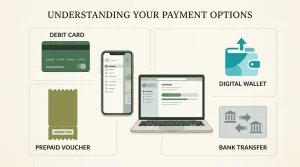
A debit card and a credit card are not interchangeable at a UK casino. Debit cards are a familiar way to pay: UK casinos commonly accept Visa and Mastercard debit cards. But the logo alone does not tell you whether the card in your hand is eligible. The cashier’s payment list and your card’s product type are what matter.
Credit-card payments for gambling have been banned in the UK since 14 April 2020, and the rule has not been relaxed. That applies to remote gambling, so a casino should not accept a credit card for a gambling deposit. If your card account offers both debit and credit features, do not assume that seeing Visa or Mastercard means the transaction will be treated as a permitted debit payment. Check the exact card product and the cashier’s instructions first.
I’d do that before entering a payment amount. Sign in, open the cashier, and look for the card option shown for your account. Confirm that it names the relevant network and accepts your specific debit card. A card logo on a general payment page is not a promise that every card issued under that logo will work. If the cashier’s wording is unclear, ask the operator rather than trying different card details and hoping one goes through.
A specialist review lists Visa and Mastercard among the payment methods, but that is not a live confirmation of what a particular UK account can use today. Availability can depend on the operator’s current setup and the card product. Treat the cashier as the practical check, not a broad list copied from a review.
There is also a separate point for anyone arriving from a Dogecoin search: card acceptance does not establish that a casino accepts Dogecoin, or that a card can be used to buy or fund Dogecoin there. Those are different payment arrangements. Do not read a casino’s Visa or Mastercard listing as evidence of a Dogecoin option, whether you are on desktop or mobile. Check the payment method actually presented in your account.
If a deposit is declined, pause before trying another route. Check whether the card is debit rather than credit, whether the casino lists it for UK customers, and whether your issuer has blocked the transaction. The cashier can confirm what the operator supports; your bank or card issuer can explain a card-side decline. No need to turn a simple check into a guessing game.
The short version: UK casinos commonly take debit cards, including Visa and Mastercard, but credit-card gambling is prohibited. Check the card type and current cashier options before you proceed.
If you want to fund a casino account without Dogecoin, the cashier may offer several familiar routes. What appears there depends on the site, and a method being available for one player does not mean it will be offered to every account. Treat each option as a separate payment choice, not as a way to buy or convert cryptocurrency.
A bank transfer sends money from your bank account to the casino. Open banking services can connect the payment to your bank, so you can approve it through the bank’s own process rather than enter card details. A specialist review describes these routes as capable of providing instant deposits and fast withdrawals at many sites. That is not a promise about every casino or transaction; check the cashier’s wording and the payment instructions before choosing.
The names can be easy to muddle. A bank transfer is the payment route, while open banking is a way of authorising access to your bank for that payment. The cashier should make clear which one it is offering and what details you need. If you prefer to keep card payments separate, this may be worth comparing. Check the account and payment details carefully. Small mismatch, needless faff.
Paysafecard is a prepaid voucher. You buy credit first, then use the voucher details to make a deposit where the casino accepts it. It is deposit-only, so do not choose it expecting to receive a withdrawal back onto the voucher. That distinction matters more than the payment screen’s tidy little logo.
A voucher can suit someone who wants to set aside a specific amount before visiting the cashier. Keep the voucher information private and enter it only in the payment flow provided by the casino. Availability and any conditions belong to that casino’s cashier; the voucher itself does not establish that a particular site accepts it.
Skrill and Neteller are examples of digital wallets used at some casino sites. Their presence is not universal, so look for them in the cashier rather than assuming that a familiar brand will be accepted. Some UKGC-licensed casinos also accept Apple Pay for deposits. If it appears, follow the prompts on your device and check the amount before approving.
A wallet or mobile payment is a separate way to pay in pounds; it does not turn a deposit into Dogecoin. Compare the options displayed to you and choose only a route whose terms you understand. For real-money gambling in Great Britain, use a UKGC-licensed casino. Keep the choice simple: bank route, voucher, wallet or Apple Pay, where offered.
A payment method is not a complete route just because it appears beside the deposit button. Before using Dogecoin, check whether the same method is available for withdrawals as well. A casino might describe a payment option without making clear that it works in both directions, so look for separate deposit and payout information or ask support to confirm.
That distinction matters if you are looking at casinos that accept Dogecoin in the UK. A general reference to cryptocurrencies does not confirm that Dogecoin is supported, and a Dogecoin deposit option alone would not tell you how a later withdrawal is handled. Get a clear answer about the named currency and the full route before sending funds. No guesswork.
I would check the details while signed in to the account I intend to use. The cashier should make it possible to see which payment route is available to that account; if the withdrawal side is unclear, ask the operator before depositing rather than assuming the same option will appear later. Keep the answer, and check that it refers to Dogecoin specifically rather than crypto payments in general.
There is another simple check: the account details and payment route should belong to the same customer. Using your own casino account and a payment account in your own name reduces the chance that basic ownership details cause avoidable friction. It is not a guarantee that a transaction will go through, but it avoids a mismatch you can prevent.
The cleanest arrangement is often one named account used consistently for both depositing and withdrawing. If you are considering switching accounts or routes between the two, first ask whether the casino permits that and what it requires. Do not assume that a route accepted for a deposit will automatically be accepted for a payout.
Before you commit, make sure you can answer these points:
If any answer is vague, pause and clarify it. That is more useful than relying on a casino’s general payment list or on someone else’s description of its options. For a Dogecoin payment, the route needs to be clear before you start, not merely familiar-sounding.
A withdrawal is not always sent wherever you choose. UK anti-money laundering rules generally require a casino to return funds to the original payment source. This is part of the checks around where money came from and where it goes, rather than a quirk of Dogecoin.
That matters if you are looking at casinos with Dogecoin withdrawals. A site mentioning cryptocurrency does not, by itself, confirm that it accepts Dogecoin payouts or that winnings can be sent directly to a Dogecoin address. Before depositing, check the cashier’s withdrawal rules and ask support to clarify the route if they are not explicit. A deposit option and a matching withdrawal option are not automatically the same thing.
There can also be a closed-loop check: the casino may need to return money to the method used to fund the account, rather than pay it to a different destination. If you have used more than one payment route, ask how the operator handles withdrawals before you play. Using your own account and payment details consistently can help avoid basic ownership questions slowing things down.
Timing is a separate issue from the transfer itself. A specialist casino review describes withdrawal processing as including the operator’s internal approval, with first withdrawals potentially taking longer while verification is completed. In practice, the relevant questions are whether your account has passed KYC and whether the casino has approved the request. A payment method advertised as fast cannot remove those steps.
Check the withdrawal status in your account and respond promptly if the casino asks for documents. If a request is pending, ask whether it is awaiting verification, internal approval or payment processing; those are different stages. Do not treat “instant withdrawal” wording as a promise that funds will arrive immediately.
For a Dogecoin payout specifically, get confirmation of the supported destination, any return-to-source requirement and the stages that affect processing before you deposit. If the operator cannot explain how a withdrawal would work, do not assume the route will be available when you want your money back. Better to know first.
A Dogecoin deposit can look affordable until you compare the amount leaving your wallet with the amount credited to your casino balance. If a cashier offers Dogecoin, check the final figures before confirming: the exchange rate, any conversion spread and any network charge can all affect the cost. I would not judge a payment by a displayed fee alone.
A specialist review identifies several possible charges to check: a casino fee, a payment-provider fee, an issuer or bank charge, an exchange-rate spread and a network fee. Not every route has every charge, so look at the details for the method and amount you intend to use. If Dogecoin is converted into pounds, compare the quoted rate with the rate applied to your transaction. A conversion spread can cost more than a flat fee that is easier to spot.
The same review notes that deposit caps can differ by payment method and account status. Check whether the cashier shows a per-transaction maximum, and whether separate daily or monthly limits apply. A payment that is within one cap may still be restricted by another. If the amount you plan to deposit is not accepted, do not assume splitting it into smaller payments will avoid the restriction; check the operator’s terms first.
For Dogecoin, look at the amount the casino says it will credit, not just the number of coins you send. Network costs and conversion can mean those figures do not match exactly. If the cashier displays a minimum or maximum in another currency, check how it translates into pounds before proceeding. The exact limits and costs need to come from the cashier and payment details available to you; a general claim about a “cheap” deposit is not enough.
I also check that the payment leaves enough room in my budget after all charges. Set your spending limit before depositing, and treat fees as part of the cost of gambling, not as an afterthought. Small print, real money.
A casino’s use of Dogecoin does not tell you whether it is connected to GamStop. The payment method and a site’s self-exclusion arrangements are separate matters, so a crypto label is no evidence that a casino is outside the scheme—or that it will accept someone who has self-excluded.
If you have registered with GamStop, treat that exclusion as a reason not to seek another gambling site. Trying to get around a decision you made to stop can undermine the protection you set up. Dogecoin does not change that.
There is another distinction worth keeping clear: a site describing itself as “not on GamStop” is not thereby a lawful option for people in Britain. Remote gambling licensees selling into the British market must hold a UK Gambling Commission licence, wherever they are based. Online gambling is legal only through licensed and regulated sites. A foreign location or cryptocurrency payment does not replace that requirement.
Before considering any casino, check its current operating licence on the UK Gambling Commission’s public register. A licence is not proof of GamStop participation, though, so do not treat one check as answering both questions. If self-exclusion status matters to you, look for clear information from the operator and contact it directly rather than relying on claims in promotional copy. If the answer is unclear, leave it there.
UK-licensed casinos must provide responsible-gambling tools, including self-exclusion. That is not a reason to assume every site has identical arrangements or that Dogecoin changes them. Nor does a search for Dogecoin slots outside GamStop establish that a particular game or casino is suitable or available.
I would keep the two checks separate: verify the operator’s UK licence, then establish its self-exclusion arrangements. If you are already excluded, don’t use a different payment method as a workaround. A coin is still just a payment route.
Returning funds to the original payment source is a common anti-fraud and anti-money-laundering control. Using the same account for deposits and withdrawals can also reduce avoidable ownership checks.
PayPal, open banking services and debit cards linked to fast payout systems are generally among the quickest options. The casino’s approval process and your verification status also affect how quickly you receive the money.
Yes, verification may be needed, and a first withdrawal can take longer while checks are completed. Licensed UK operators must also verify your age before accepting a deposit.
No. The payout still depends on the casino’s internal approval process and whether your account is fully verified.
No. Check the cashier to confirm that the specific Visa or Mastercard product you hold is eligible; credit card gambling is banned in the UK.
The casino may need time for internal approval, and a first withdrawal can take longer if verification is still being completed.
Yes, Skrill remains a common deposit option at UK-friendly casino sites, though availability varies by site and it may be excluded from some promotions.