See how phone-bill deposits differ from card payments and what to check before choosing this route in a casino cashier.
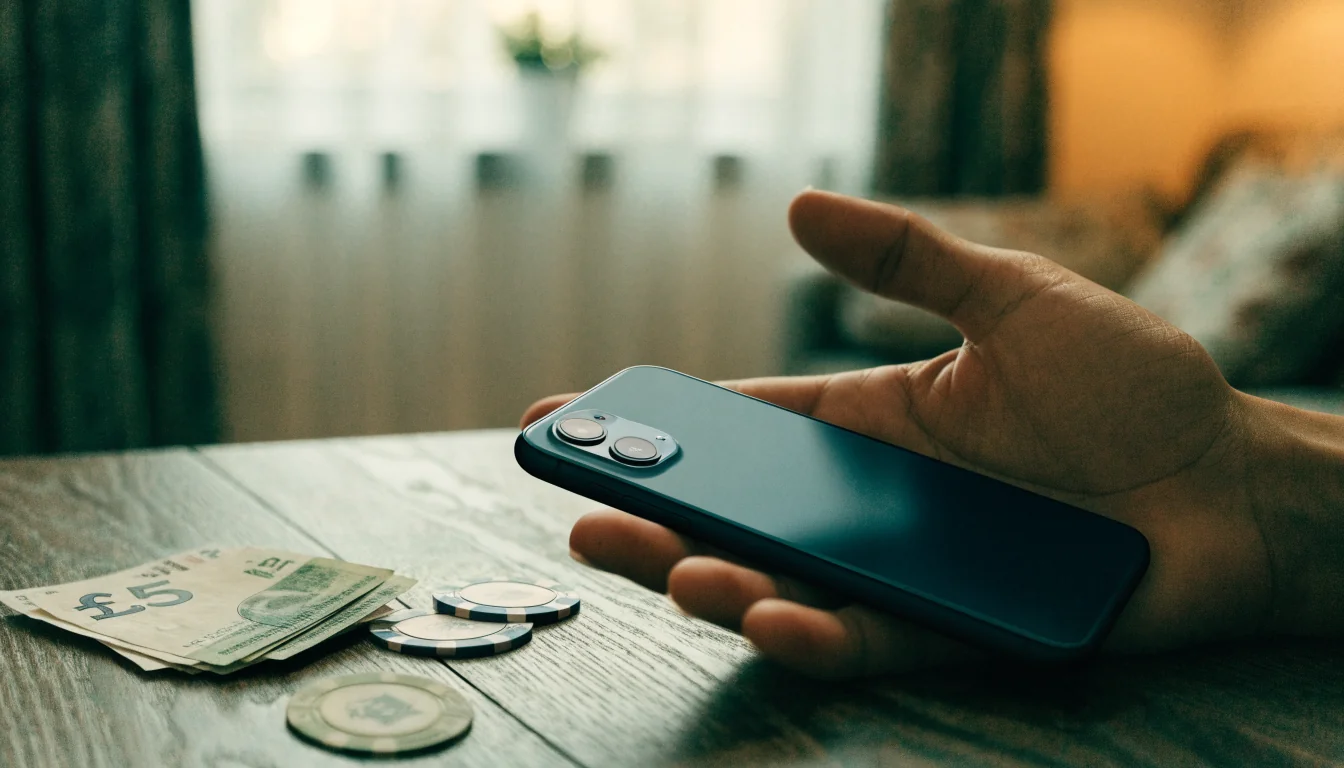
At a UK casino, “mobile top-up” normally means paying for a deposit through your mobile phone account or its prepaid balance. The casino receives the deposit, while the amount is charged through your phone service. Payforit is one method associated with this kind of payment.
That is different from opening a casino on your phone and using a debit card. The device does not determine the payment method: a card payment made on a mobile screen remains a card payment. A pay-by-mobile deposit, by contrast, uses your mobile account as the route for the charge. The distinction matters when you are choosing a method in the cashier, because “mobile casino” describes where you play, not necessarily how you fund the account.
People often use “top-up” loosely, so it is worth checking what the cashier actually means. If it names Payforit, the payment is tied to your phone account or prepaid balance. If it asks for card details, you are making a card deposit, even if you are using the same handset. I would not treat the two as interchangeable: they have different rules and may appear as separate options.
When choosing a mobile top-up casino in the UK, it helps to check the available information before deciding where to play. Use the payout speed listed for each operator as one point to consider.
WinBeast
WinBeast lists a payout speed of 1–3 business days. You can use this as a reference when considering the operator.
SpinFormula
SpinFormula lists a payout speed of 1–3 business days. You can use this as a reference when considering the operator.
NightWin
NightWin lists a payout speed of 1–3 business days. You can use this as a reference when considering the operator.
EvoSpin
EvoSpin lists a payout speed of 1–3 business days. You can use this as a reference when considering the operator.
SlotoSport
SlotoSport lists a payout speed of 1–3 business days. You can use this as a reference when considering the operator.
Jetsetspins
Jetsetspins lists a payout speed of 1–3 business days. You can use this as a reference when considering the operator.
NightLuck
NightLuck lists a payout speed of 1–3 business days. You can use this as a reference when considering the operator.
x3bet
x3bet lists a payout speed of 1–3 business days. You can use this as a reference when considering the operator.
Zombillion
Zombillion lists a payout speed of 1–3 business days. You can use this as a reference when considering the operator.
BeOnBet
BeOnBet lists a payout speed of 1–3 business days. You can use this as a reference when considering the operator.
There is an important UK restriction on credit cards. Remote gambling operators cannot take credit-card payments for gambling. That restriction also applies when the card payment is routed through a money service business; changing the route does not make a credit card an acceptable way to fund gambling. A debit card used on your phone is not a “mobile top-up” in this sense, and the rule is specifically about credit-card payments.
This is a practical point, not just a label in the cashier. Before confirming a deposit, check which method you have selected and which account or card will be charged. If you meant to pay through your phone balance but see a card form, stop and check the selection rather than assuming that using a phone has turned the payment into pay-by-mobile.
There is also a required step for new remote gambling customers before their first deposit. The operator must prompt you to consider setting a financial limit. This is about deciding what you can afford to spend, not simply choosing the amount for one deposit. Account-level tools for setting limits must remain accessible after that first prompt, so you can return to them later rather than treating the decision as a one-off screen.
Take a moment with that prompt before funding the account. A deposit method can make the payment feel separate from everyday spending, especially when it is attached to a phone account rather than entered as a card transaction. The payment route does not change the fact that casino deposits are gambling spend. If you set a limit, make sure it reflects your own budget and use the account controls if you want to review it.
The phrase “mobile top-up casino” can therefore point to two different things in casual conversation: playing at a casino on a phone, or funding a casino through a phone-linked payment method. Only the second is pay-by-mobile. The first could involve any payment option the casino provides through its cashier. Keeping that distinction clear helps you understand what you are authorising before money moves.
In short, look at the method name and the account being charged, not the screen you happen to be holding. A phone is just the device; Payforit is a payment route. And in Great Britain, credit cards cannot be used to fund online gambling, whether directly or through an intermediary. Before your first deposit, consider the financial-limit prompt and keep the account’s limit tools in reach afterwards. A small check, made before you confirm, can prevent a very ordinary misunderstanding.
A phone-billed deposit is one way to put money into a casino account, but it is not interchangeable with paying by card or using another payment service. The useful comparison is practical: which method the casino accepts, what account or balance it draws on, and whether it suits the amount you intend to deposit. The cashier is the place to check what is available for your account; a payment method mentioned in a review is not a promise that every casino offers it.
Payforit is the phone-billing option to look for when you want a deposit charged through your mobile service. That can make it a distinct choice from a debit card, which takes funds from a bank account. But the distinction does not make phone billing the default. A specialist review of UK casino payment options describes debit-card deposits as free and generally more widely accepted than Payforit. That is a useful comparison, not a guarantee about an individual operator: check the live cashier before choosing.
For many players, the debit card is the straightforward reference point. If the cashier accepts your card, the deposit is taken from the linked bank account, and the review-based comparison identifies no casino deposit fee for debit-card use. Payforit may be relevant if you specifically want to charge a deposit through your phone instead. The trade-off is reach: Payforit is not listed as broadly as debit cards in that comparison, so you may find it missing from a particular cashier.
Other options appear in payment reviews too. Independent specialist reviews list Visa, Mastercard, Skrill, Neteller and PaysafeCard, as well as several major cryptocurrencies, among methods accepted by casinos they cover. Treat that as a snapshot of reviewed operators, not a standard menu across the UK market. The names on a review page cannot tell you whether your chosen casino accepts a method, whether it is open to your account, or whether its terms suit you. Check the operator’s own cashier.
Those methods also differ in where the money comes from. Visa and Mastercard are card brands; Skrill and Neteller are e-wallets; PaysafeCard is a separate payment option. That gives you more than one possible route to fund an account, but it does not make the routes equivalent. You may prefer to use a card already accepted by the casino, or to use a phone-billed option if that is the route you are considering. The point is to compare the options actually shown to you, rather than assume a payment method is available because it appears elsewhere.
The word “top-up” can make the options sound more similar than they are. A mobile top-up at a casino does not mean using a debit card on your phone: the device you use to open the cashier does not determine the payment method. A card deposit remains a card deposit whether you make it on a handset or a computer. Phone billing specifically means selecting a phone-billed method such as Payforit, where offered. That distinction helps when you are looking for an online casino deposit by mobile and want to know what will be charged.
I would compare the cashier entries in this order: first, identify the methods available to your account; then check the deposit information shown for each one; finally, choose the route that matches how you want to fund play. Do not infer acceptance from a logo on an old page or from a list covering several casinos. Payment menus change, and the specific operator’s live cashier is more relevant than a broad review. Small check, fewer surprises.
Phone billing can be a useful alternative, but it is not automatically cheaper, more widely accepted or more suitable than a card. The available comparison points the other way on two practical details: debit-card deposits are described as free, and cards are generally accepted at more casinos than Payforit. Meanwhile, reviews name other methods, including e-wallets and PaysafeCard, but their presence in a review does not establish availability at the casino you have chosen.
So if you are deciding between a phone-billed deposit and another way to pay, do not choose by label alone. Open the cashier, see what it offers, and compare the details attached to those options. A phone top-up may fit what you want, while a debit card or another listed method may be available where Payforit is not. The cashier settles that question for the account you are using.
Payforit puts a casino deposit through your mobile account rather than taking it from a debit card. Where the money lands depends on the sort of phone plan you have: with a monthly contract, the deposit is added to a future phone bill; with Pay as You Go, it comes out of the credit already loaded on your phone. The casino balance receives the deposit, but the cost is carried by your phone account.
That difference matters when you check what you can afford. A contract customer may not see the amount leave a bank account at the moment of depositing; it appears as part of a later phone bill instead. A Pay as You Go customer has a more immediate check: the deposit uses prepaid credit, so the available balance has to cover it. In either case, it is still money spent on gambling, not extra credit supplied by the casino.
I would treat the phone bill as part of the spending picture, not as a separate pot. If you are on contract, look at the amount as a future bill commitment before you deposit. If you use Pay as You Go, remember that casino spending reduces the credit left for other phone use. The payment route changes how the cost is collected, not what the cost means.
A specialist review reports Payforit casino deposit minimums in the £3–5 range and a maximum of £30. That is a guide to the amounts described in that review, not a promise that every casino’s cashier will show the same choices. The amount available to you is the one displayed by the operator when you select Payforit.
There is also a transaction cap: the Phone-paid Services Authority sets the Payforit limit at £30 for a single transaction. A casino may offer a lower maximum, so the amount shown in its cashier can be the practical limit for that deposit. The cap is not a suggested spending target. It simply marks the upper boundary for an individual Payforit transaction.
For a monthly contract, the amount you choose is added to a later bill. For Pay as You Go, the same kind of deposit is deducted from your prepaid balance. So a deposit at the upper end of the range has different bookkeeping on the two plans, but neither makes the money less real. Keep the amount in view alongside your other spending.
The casino screen tells you how much is being credited to your gambling account. Your phone account tells you how that charge is collected. Those are two sides of the same transaction, and it is easy to focus on the casino balance while overlooking the bill that will carry the cost.
Before choosing an amount, check whether you are using a contract or Pay as You Go account, then make sure the displayed deposit fits your own budget. On contract, account for it in the bill you will later need to pay. On prepaid credit, make sure spending it will not leave you short for the phone service you rely on. That is a personal check, not a feature Payforit can make for you.
The £30 transaction cap should also stop one assumption: Payforit is not a way to put a larger casino deposit through as one phone-billed payment. The limit applies to each transaction, and trying to treat it as a route around the cap is the wrong approach. If the cashier’s available amounts do not suit your budget, pause rather than pressing ahead simply because the phone account is at hand.
I find the contract-versus-prepaid distinction is the useful detail to settle first. One plan adds the charge to a future bill; the other consumes credit you have already loaded. Then compare the amount shown in the cashier with the reported £3–5 minimum range and £30 ceiling, remembering that the operator’s displayed options determine what it will accept. Keep the deposit modest enough to fit the account and your budget. The phone bill is still yours.
If you are trying to top up a casino by mobile, the text message is part of the payment process, not just a notification that something has happened. With Payforit, the sequence is straightforward: choose Payforit in the casino cashier, enter your mobile number, receive an SMS containing a confirmation code, then submit that code to complete the deposit.
Take it one step at a time. First, make sure Payforit is the method you selected; the cashier may show several options, and the instructions differ between them. Enter the number associated with the phone you intend to use, then wait for the confirmation message. Once it arrives, type its code into the casino’s prompt and submit it. That final step matters: receiving a message is not the same as confirming the payment.
Payforit Deposit Process
Selection
Choose Payforit in the casino cashier and enter your mobile number.
Verification
Wait for an SMS containing a confirmation code to arrive on your phone.
Completion
Type the code into the casino's prompt and submit it to complete the deposit.
I’d check the amount and the payment details shown on screen before submitting anything. If the number is wrong, or the message does not match the transaction you are trying to make, stop and check the cashier rather than guessing. A confirmation code is there to authorise a specific step in the process; it is not something to pass to another person or enter into an unrelated page.
That is the Payforit flow. Boku also uses SMS, but the key point is different: with Boku, you confirm the transaction by text before the funds move. So when you see “SMS confirmation” in a mobile casino top-up process, do not assume that every provider uses the message in exactly the same way. Payforit sends a code for you to submit in the casino’s payment flow; Boku requires confirmation by SMS before the transaction proceeds.
This distinction helps when a deposit appears to pause. For Payforit, check whether you have received the code and actually submitted it. For Boku, check whether you completed the SMS confirmation. Do not keep restarting the payment just because the screen has not changed immediately; first read the prompt and see whether it is waiting for your action. A duplicate attempt can make it harder to tell which transaction you confirmed.
If no message arrives, or the code is rejected, avoid repeatedly entering guesses. Recheck the number and the on-screen instructions, and use the casino’s support route if the cashier does not explain what to do next. I would also leave the payment screen open while following its steps, so you can match the message to the transaction you started rather than relying on memory.
There is no clever shortcut here. Choose the method, follow its own prompt, and confirm only the transaction you recognise. The text is the checkpoint.
Payforit is a deposit route, not a way to collect casino winnings. If you add money through your phone bill or prepaid balance, you cannot send a casino withdrawal back through Payforit. That is the part worth sorting out before you play, not after a balance is sitting in your account.
You will need a separate payout method that the casino supports and can verify against your account. Specialist reviews of UK-licensed casinos list debit cards, bank transfers, PayPal and e-wallets such as Skrill and Neteller as possible withdrawal routes. That does not mean every operator offers every option, or that the method you used to deposit will be available for cashing out. I would check the withdrawal choices shown for my own account rather than rely on a general payment list.
There is a practical difference between paying by phone and receiving a payout. Your phone account can fund a deposit, but it cannot serve as the return route for casino funds. So before treating Payforit as a handy way to top up for slots, make sure you have another supported payment method ready and that its details belong to you. A deposit working successfully does not confirm that a withdrawal route is set up.
Bonuses need a separate check, too. Specialist reviews report that most UK casinos leave Payforit deposits out of welcome offers and other promotions. The deposit may still reach your casino balance, but it may not count towards a bonus or qualify for the promotional terms you had in mind. That can make a phone-bill top-up less attractive if the offer is the reason you were depositing.
Read the offer’s payment exclusions and the casino’s current terms before you opt in or make a deposit. Do not assume that a bonus applies just because it appears on the site, or that every deposit method is treated alike. If the terms are unclear, ask the operator to confirm whether a Payforit deposit qualifies before you proceed. A tidy way to avoid a later argument.
In practice, I’d treat Payforit as a limited deposit choice: useful only if you are comfortable with the phone-account charge, have another verified payout route available, and are not counting on a promotion that excludes it. For someone who wants to deposit and withdraw through one method, it is a poor fit. Check the cashier and account terms for the options actually available to you; payment arrangements can differ between operators and may change.
If you want to play slots on your phone and pay by mobile, Payforit may be an option—but being on a mobile device does not guarantee that it will be. Payforit is generally reserved for mobile players, yet support still depends on the casino you choose. A phone-friendly site and a payment method in its cashier are separate things.
There is another distinction worth keeping straight: a casino accepting Payforit does not automatically mean that every slot can be played through a mobile browser or app. The payment route funds your casino account; it does not tell you which games the operator has made available on your device. Check the game itself as well as the cashier.
I’d start by opening the casino’s current cashier while signed in on the phone you plan to use. Look for Payforit among the deposit options. If it is not shown there, do not assume that a search result, an old review or the fact that the casino works on mobile means you can use it. Payment options can differ between operators and may change, so the live cashier is the useful check.
If Payforit is listed, check that you are using the casino’s mobile site or app and then open the slot you want to play. If the game does not load or is not offered on your device, that is a separate compatibility issue; choosing a mobile payment method cannot fix it. Likewise, being able to play a slot on your phone does not prove that Payforit is available for your account.
Keep the checks in that order: mobile access, the selected game, then the deposit option shown for your account. It avoids the small but irritating assumption that “mobile” describes one universal service. It doesn’t.
If your main aim is to fund slots from your phone, Payforit can suit that setup where the casino actually offers it. But don’t treat “mobile slots” as a promise of Payforit support, or treat Payforit support as a promise that every game will work on your handset. The cashier and the game lobby answer different questions. Check both before you commit to a deposit.
If Payforit is missing from the cashier, or you would rather not charge a deposit to your phone account, there are other routes to consider. Boku, e-wallets and Paysafecard are identified as alternatives in a specialist review, but that does not mean every UK casino accepts them. Availability is specific to the operator and can change, so check the payment options shown after you sign in.
Boku is still a pay-by-mobile option, but it is separate from Payforit. If your aim is to fund play using your phone rather than a card, look for Boku in the cashier and confirm that the operator currently supports it. Do not assume that finding Boku mentioned elsewhere means it will appear on your account.
An e-wallet such as Skrill or Neteller may suit you if you already use one and it appears among the casino’s current deposit methods. It is not the same as putting a charge on your mobile account: you pay from the wallet balance or its linked funding source. Keep the route in line with the casino’s rules; an e-wallet should not be used to move credit-card funds into a gambling account.
Paysafecard is another possible alternative if it is listed in the cashier. Check the operator’s instructions before buying or using a voucher, rather than assuming that acceptance at one casino carries over to another. Small detail, big difference.
I’d treat these as options to verify, not a guaranteed menu. If none appears, choose only from the methods the casino actually offers. For a UK-facing real-money casino, make sure the operator holds a UKGC licence, and set a financial limit before making your first deposit if you are a new customer.
Boku puts a firm ceiling on what you can send in one go: specialist reviews describe its standard transaction cap as £30. Treat that as a guide, not a promise that every casino offers the same amount. The cashier sets out the deposit options and limits for your account, so check there before you try to pay.
A failed deposit can come down to the balance on your phone, not the casino account. Your available credit needs to cover the deposit and any processing fee your mobile network adds. If it covers only the deposit itself, there may not be enough left for the whole charge to go through.
That fee is not a fixed Boku price across every customer. A network may apply a processing charge, and the amount can depend on both the provider and your tariff. Check your phone balance and tariff details before confirming; don’t assume that a displayed deposit amount is the full amount that will come off your credit.
The same point matters whether the phone account is pay-as-you-go or a monthly contract: check what the charge will mean for your available credit or bill, rather than relying on the amount you intend to deposit. If the transaction is declined, review the available balance and any network charge, then check the casino cashier for its current Boku instructions. Repeated attempts without checking those details can leave you guessing at the cause.
Boku support itself can change between operators and accounts. Before opening a deposit flow, look for Boku in the casino’s live cashier and read the displayed terms; a method mentioned in a general review may not be offered to you there. The cashier is the practical check. If Boku is absent, don’t assume a workaround will make it available.
When I’m checking whether a UK casino’s pay-by-mobile option suits me, I start in the live cashier, not an old review or a promotional page. Payment details can change, and the figures shown may differ between methods. The cashier is where you can see what applies to your account now.
Open the deposit page and select the method you intend to use. Check its minimum deposit and maximum transaction value, then look for any fee and the stated processing details. Don’t assume that the limits shown for a debit card or e-wallet also apply to a mobile top-up. A specialist payment review also advises checking the cashier’s current terms before depositing; that is sensible housekeeping, not a promise that every operator displays information in the same place.
Before you confirm, check your account’s financial-limit controls as well. New customers should be prompted to consider setting a financial limit before their first deposit. Take that prompt seriously, and make sure you can find the account controls again afterwards. A limit is easier to set before you start than to reconstruct after a rushed decision.
I also check that the page still shows the method as available after I sign in. A general payment page can describe options that are not offered to every account, while the cashier reflects the choices presented to you. If a fee or processing detail is unclear, pause and check the operator’s current terms or ask its support team before paying.
Treat withdrawal information as changeable too: methods, limits, fees and processing statements can be revised. The cashier and current operator terms matter more than a claim copied from an older page. No guessing.
Before funding an account by phone, look at how you would get money out. A deposit option does not automatically double as a withdrawal option, so check the cashier for the route available to your account. A specialist review also advises checking this before depositing; treat the live cashier and the operator’s current terms as the practical reference.
Payforit cannot be used to withdraw casino funds. If you use it to top up, make sure you have another verified payout route available. The operator may ask you to complete identity checks before processing a withdrawal, so check whether anything is outstanding rather than waiting until you want to cash out.
Read the terms for the withdrawal method, too. Deposit and payout options can differ, and limits, fees and processing details depend on the operator and selected method. A request may be affected by a minimum withdrawal limit; if it exceeds a maximum, the operator may split it into separate payments. Check the current rules in the cashier, since these details can change.
Some casinos outside the UK require withdrawals through the same method used for the deposit. For a UK player, stick to a casino with a UKGC licence and confirm its terms before you pay by phone. A specialist review recommends checking the payout route, identity requirements and operator terms in advance. Sensible housekeeping.
Your phone credit may not cover the deposit plus any network fee, or you may not have completed the SMS confirmation. Payforit charges a contract phone bill or a Pay as You Go balance.
Yes, Payforit deposits are capped at £30 per transaction.
For Payforit, the typical minimum is £3–5. Check the casino’s live cashier for the minimum that applies to your chosen payment method.
Your mobile network may charge a processing fee for Boku transactions. The fee can vary with your network and tariff.
No. Visa and Mastercard are card brands, not a guarantee that the card is debit; check the card type before depositing. UK remote gambling operators cannot accept credit-card payments for gambling.